Thursday, February 20, 2014

Top 10 Greatest IT People On The List - Part [2/2]

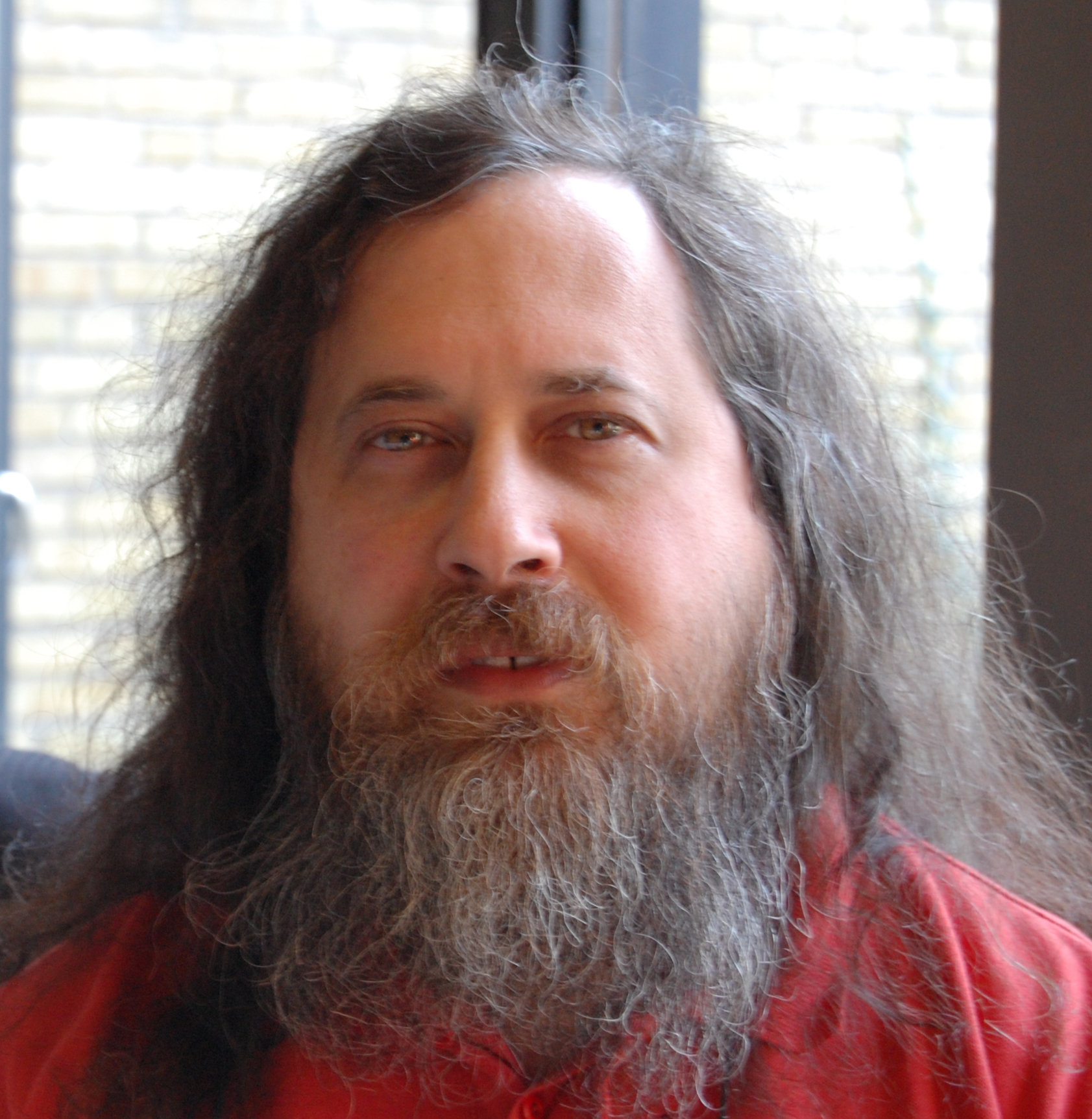
6. Richard Stallman
Richard Stallman is the founder of the GNU Project, an initiative to develop a complete Unix-like operating system which is free software. Stallman has written several popular tools, created the GNU licence and campaigns against software patents.


7. Arthur C Clarke
2001: A Space Odyssey writer Arthur C Clarke has consistently been ahead of his time in predicting how technology will change the world. Most notably, in 1945 he suggested that geostationary satellites would make ideal telecoms relays.


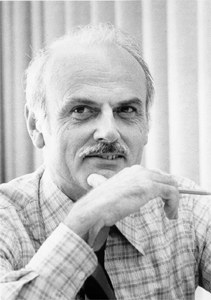
8. Ted Codd
Ted Codd created 12 rules on which every relational database is built - an essential ingredient for building business computer systems.


9. Steve Shirley
Steve Shirley was an early champion of women in IT. She founded the company now known as Xansa, pioneered new work practices and in doing so created new opportunities for women in technology.


10. Martha Lane Fox
With Brent Hoberman, Martha Lane Fox created Lastminute.com in 1998, and as "the face" of Lastminute raised the profile of e-commerce ever higher in the public consciousness.


Source: http://www.computerweekly.com/


Part 1 | 2

Top 10 Greatest IT People On The List - Part [1/2]

1. Steve Jobs: innovator who enjoyed a second bite of the apple
Steve Jobs, the co-founder and chief executive of Apple Computer, topped the Computer Weekly 40th anniversary poll due to the devoted following he has generated through his pioneering work in personal computing and product design.
Jobs was born in 1955 in San Francisco, and during his high school years he showed his early enthusiasm for computing by attending after-school lectures at the Hewlett-Packard Company in Palo Alto, California. He met fellow Apple founder Steve Wozniak during a summer job at HP.
In the autumn of 1974, Jobs, who had dropped out of university after one term, began attending meetings of the Homebrew Computer Club with Steve Wozniak. He took a job as a technician at Atari, a manufacturer of popular video games.
At the age of 21 Jobs saw a computer that Wozniak had designed for his own use and convinced his friend to market the product.
Apple Computer was founded as a partnership on 1 April 1976. Though the initial plan was to sell just printed circuit boards, Jobs and Wozniak ended up creating a batch of completely assembled computers, and entered the personal computer business.
Their second machine, the Apple II, was introduced the following year and became a huge success, turning Apple into an important player in the nascent personal computer industry.
In 1983 Apple launched the Lisa, the first PC with a graphical user interface – an essential element in making computing accessible to the masses. It flopped because of its prohibitive price, but the next year Apple launched the distinct, lower priced Macintosh and it became the first commercially successful GUI machine.
Despite his success in founding Apple, Jobs left following a boardroom row in 1985. But his influence on the computer industry did not end there.
Jobs moved on to found Next Computer, then in 1986 he bought little known The Graphics Group from Lucasfilm, which achieved global dominance in animated feature films during the 1990s, after being renamed Pixar.
Much of Next’s technology had limited commercial success, but it laid the foundation for future computing developments. The company pioneered the object-oriented software development system, Ethernet port connectivity and collaborative software. It was the Next interface builder that allowed Tim Berners-Lee to develop the original world-wide web system at Cern.
Without Jobs, Apple had stumbled. Market share fell while it struggled to release new operating systems. Its answer was to buy Jobs’ company Next, together with its innovative operating system, and welcome back its charismatic former CEO.
On returning to Apple, Jobs drove the company ever deeper into the consumer electronics and computing market, launching the iMac and iPod.
Whether Jobs’ next creation changes the world like the Apple II, or turns out to bomb like the Apple Lisa, his place in computing history is guaranteed. 
2. Tim Berners-Lee: father of the web and champion of IT freedom
Dotcoms, bloggers and Google all have one man to thank for their place in the 21st century world. In 1990,
Tim Berners-Lee made the imaginative leap to combine the internet with the hypertext concept, and the worldwide web was born.
Born in 1955 in London, Berners-Lee’s parents were both mathematicians who were employed together on the team that built the Manchester Mark I, one of the earliest computers.
After attending school in London, Berners-Lee went on to study physics at Queen’s College, Oxford, where he built a computer with a soldering iron, TTL gates, an M6800 processor and an old television. While at Oxford, he was caught hacking with a friend and was subsequently banned from using the university computer.
He worked at Plessey Telecommunications from 1976 as a programmer and in 1980 began working as an independent contractor at the European nuclear research centre Cern.
In December 1980, Berners-Lee proposed a project based on the concept of hypertext, to facilitate sharing and updating information among researchers. While there, he built a prototype system called Enquire.
He joined Cern on a full-time basis in 1984 as a fellow. In 1989, Cern was the largest internet node in Europe, and Berners-Lee saw an opportunity. “I just had to take the hypertext idea and connect it to the TCP and DNS ideas,” he said, and the worldwide web was born.
He wrote his initial proposal in March of 1989, and in 1990, with the help of Robert Cailliau, produced a revision which was accepted by his manager, Mike Sendall.
He used similar ideas to those underlying the Enquire system to create the worldwide web, for which he designed and built the first web browser and editor (called World-wide Web and developed on Nextstep) and the first web server called Hypertext Transfer Protocol Daemon (HTTPD).
The first website built was at http://info.cern.ch/ and was put online on 6 August 1991. The URL is still in use today. It provided an explanation of the worldwide web, how one could own a browser and how to set up a web server. It was also the world’s first web directory, since Berners-Lee maintained a list of other websites.
In 1994, Berners-Lee founded the World Wide Web Consortium (W3C) at the Massachusetts Institute of Technology. It comprised various companies willing to create standards and recommendations to improve the quality of the web.
Berners-Lee made his ideas available freely, with no patent and no royalties due. He is now the director of W3C, a senior researcher at MIT’s CSail, and professor of computer science at Southampton University.
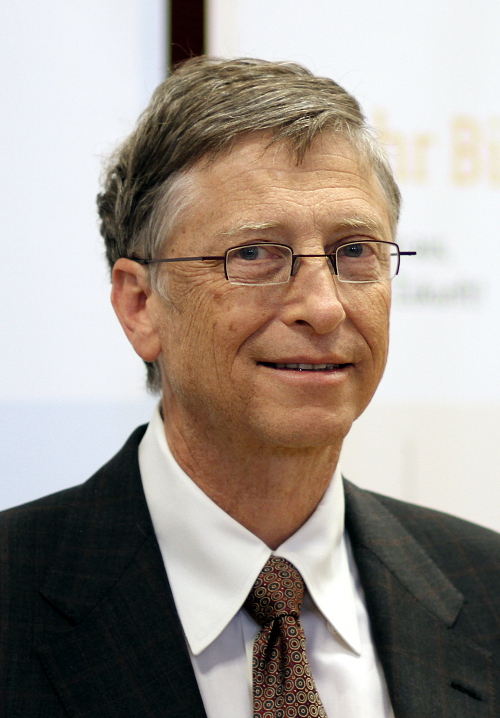
3. Bill Gates: mixing maths and money to build microsoft
As joint founder of the world’s biggest software company, Microsoft, Bill Gates’s approach to technology and business was instrumental in making technology available to the masses.
Gates was born in Seattle, Washington in 1955 to a wealthy family: his father was a prominent lawyer and his mother served on the board of directors for First Interstate Bank and The United Way.
At school Gates excelled in mathematics and the sciences and by the age of 13 he was deeply engrossed in software programming.
With other school mates he began programming and bug fixing for the Computer Center Corporation, and in 1970 Gates formed a venture with fellow school student and Microsoft co-founder, Paul Allen, called Traf-O-Data, to make traffic counters using the Intel 8008 processor.
In 1973, Gates enrolled at Harvard University, where he met future business partner Steve Ballmer. Their first venture was to develop a version of the Basic programming language for the Altair 8800, one of the first microcomputers.
Soon afterwards Gates left Harvard to found “Micro-Soft”, which later became Microsoft Corporation, with Allen. Microsoft took off when Gates began licensing his MS-Dos operating systems to manufacturers of IBM PC clones. Its drive to global dominance continued with the development of Windows, its version of the graphical user interface, as an addition to its Dos command line.
By the early 1990s, Windows had driven other Dos-based GUIs like Gem and Geos out of the market. It performed a similar feat with the Office productivity suite.
Gates fought hard to establish Micro­soft’s dominant position in the software industry and has fought even harder to defend it. His ability to get Microsoft software pre-installed on most PCs shipped in the world made Microsoft the world’s largest software house and Gates one of the world’s richest men. It also meant Microsoft found itself on the wrong end of anti-trust legislation in both the US and Europe.
Gates stood down as chief executive of Microsoft in 2000 to focus on software development and on 16 June 2006, he announced that he would move to a part-time role with Microsoft in 2008 to focus on his philanthropic work.
Since 2000, Gates has given away about £15.5bn, a third of his wealth, to charity. Such is his fame in the world outside computing,fictional Gates characters have appeared in cartoons including the Simpsons, South Park and Family Guy.
4. James Gosling
Of your choice of the most influential people in IT, James Gosling is the true geek. Unlike Bill Gates and Steve Jobs, neither of whom finished college, Gosling completed a PhD in computer science and contributed to software innovation at a technical level.
Born in 1955 near Calgary, Canada, Gosling is best known as the father of the Java programming language, the first programme language designed with the internet in mind and which could adapt to highly distributed applications.
Gosling received a BSc in computer science from the University of Calgary in 1977, and while working towards his doctorate he created the original version of the Emacs text editor for Unix (Gosmacs). He also built a multi-processor version of Unix, as well as several compilers and mail systems before starting work in the industry.
In 1984, Gosling joined Sun Microsystems, where he is currently chief technology officer in the developer product group.
In the early 1990s, Gosling initiated and led a project code-named Green that eventually became Java. Green aimed to develop software that would run on a variety of computing devices without having to be customised for each one.
Although much of the technology developed as part of Green never saw the light of day, Gosling realised that some of the underlying principles they had created would be very useful in the internet age.
Sun formally launched Java in 1995. Gosling did the original design of Java and implemented its original compiler and virtual machine. For this achievement he was elected to the US National Academy of Engineering. He has also made major contributions to several other software systems, such as Newa and Gosling Emacs.
Although some critics say Java has not lived up to its initial "write-once-run-anywhere" claim, Gosling's success in the Computer Weekly polls is precisely because Java has allowed the creation of robust, reusable code which runs on devices as diverse at mobile phones, PCs and mainframes.
5. Linus Torvalds
As the creator of the Linux operating system, Linus Torvalds has been a driving force behind the whole open source movement, which represents not only an ever increasing challenge to proprietary software, but is also the inspiration for the industry to move to open standards.
Torvalds remains the ultimate authority on what new code is incorporated into the Linux kernel.




Part 1 | 2

Top 10 Maddest Scientists in History - Part [2/2]


6
Sergei Bruyukhonenko: The Dog Decapitator

Way before Vladimir Demikhov, Bruyukhonenko's mad experiments on dogs led to the development of open-heart procedures. He developed a crude machine called the autojektor (a heart and lung machine). By using this primitive machine, Bryukhonenko kept the heads of severed dogs alive. In 1928, he displayed one of the heads in front of an audience. To prove it was real, he banged a hammer on the table. The head flinched. When a light was shone in its eyes, the eyes blinked. And when it was fed a piece of cheese, the remnants promptly popped out of the esophageal tube, much to the displeasure of disgusted viewers. 

7
Andrew Ure: The Scottish Butcher

Andrew Ure, despite his many accomplishments as a Scottish doctor, was more famously known for four experiments conducted on Matthew Clydesdale on November 4, 1818. The first experiment involved an incision in the nape of the neck. Part of the vertebra was removed. An incision was then made in the left hip. Then a cut was made in the heel. Two rods connected to a battery were placed in the neck and hip, which caused great, uncontrollable convulsions. The 2nd rod was then placed into the heel, whereby the left leg kicked with such force, that it nearly knocked over an assistant. The 2nd experiment made the diaphragm of Forster's chest rise and lower, as if he were breathing again.

Ure had reported that had Forster's blood not been drained, or his neck broken from the hanging, he was sure he could bring him back to life. The 3rd experiment showed the extraordinary facial expressions exhibited when Ure made an incision in Forster's forehead. The rod was inserted, and Forster's face began to show emotions of anger, horror, despair, anguish, and hideous, contorted smiles. The expressions scared viewers so badly, that one doctor who was known to have a strong stomach, passed out on the spot. The final experiment had people believing that Forster was indeed alive. A cut was made into the forefinger. Once the rod was inserted, Forster began to raise his hand and point to people in the audience. Needless to say, many were horrified. 

8
Shiro Ishii: Dr. Pure Evil

Ishii was a microbiologist and the lieutenant general of Unit 731, a biological warfare unit of the Imperial Japanese Army during the Second Sino-Japanese War. He was born in the former Shibayama Village of Sanbu District in Chiba Prefecture, and studied medicine at Kyoto Imperial University. In 1932, he began his preliminary experiments in biologicalwarfare as a secret project for the Japanese military. In 1936, Unit 731 was formed. Ishii built a huge compound — more than 150 buildings over six square kilometers — outside the city of Harbin, China.

Some of the numerous atrocities committed by Ishii and others under his command in Unit 731 include: vivisection of living people (including pregnant women who were impregnated by the doctors), prisoners had limbs amputated and reattached to other parts of their body, some prisoners had parts of their bodies frozen and thawed to study the resulting untreated gangrene. Humans were also used as living test cases for grenades and flame throwers. Prisoners were injected with inoculations of disease, disguised as vaccinations, to study their effects. To study the effects of untreated venereal diseases, male and female prisoners were deliberately infected with syphilis and gonorrhea via rape, then studied. Having been granted immunity by the American Occupation Authorities at the end of the war, Ishii never spent any time in jail for his crimes and died at the age of 67 of throat cancer. 

9
Kevin Warwick: The First Human Cyborg

Kevin Warwick is a British scientist and professor of cybernetics with such a fascination with for robots, that he's endeavoring to be the first man ever to become a cyborg.

On 1998, a simple RFID transmitter was implanted beneath Warwick's skin, and used to control doors, lights, heaters, and other computer-controlled devices based on his proximity. The main purpose of this experiment was said to be to test the limits of what the body would accept, and how easy it would be to receive a meaningful signal from the chip.

On 2002, a more complex neural interface was implanted on his nervous system, getting access to his nervous signals. The experiment proved so successful, that the signal produced was detailed enough for a robot arm to mimic the actions of Warwick's own arm.

Later, a highly publicised extension to the experiment, in which a simpler array was implanted into Warwick's wife—with the aim of creating a form of telepathy or empathy using the Internet to communicate the signal from afar—was also successful, resulting in the first purely electronic communication experiment between the nervous systems of two humans. His experiments are still on. 

10
John Lilly: The Sensory Deprivation Tank creator

To find out what would happen if the brain was cut off from all external stimuli, scientist John Lilly built the first sensory deprivation tank in 1954. Floating in warm water for hours in complete darkness and silence, Lilly began to experience vivid fantasies. "These are too personal to relate publicly," he reported later. The hallucinations of his test subjects were similarly difficult to categorize scientifically. This was one reason why his research did not take off.

Lilly later gave up scientific research and founded the firm Samadhi Tanks, which manufactured tanks for domestic use. On 1980 Lilly's work was the model for the film "Altered States". Having became something of a New Age guru, he died in 2001.
Source: www.oddee.com/

Page 1 | 2

Top 10 Maddest Scientists in History - Part [1/2]


1
Vladimir Demikhov: The Two-Headed Dog Surgeon

On 1954, soviet surgeon Vladimir Demikhov, revealed his masterpiece to the world: a two-headed dog. The head of a puppy had been grafted onto the neck of an adult German shepherd. The second head would lap at milk, even though it did not need nourishment — and though the milk then dribbled down the neck from its disconnected oesophagus. Although both animals soon died because of tissue rejection, that did not stop Demikhov from creating 19 more over the next 15 years.

2
Stubbins Ffirth: The Yellow Fever Vomit-Drinking Doctor

During the 1800s, a doctor training in Philadelphia, Stubbins Ffirth, formed the hypothesis that yellow fever was not an infectious disease, and proceeded to test it on himself. He first poured infected vomit into open wounds, then drank the vomit. He did not fall ill, but not because yellow fever is not infectious: it was later discovered that it must be injected directly into the bloodstream, typically through the bite of a mosquito.

3
Josef Mengele: The Angel of Death

Joseph Mengele gained notoriety chiefly for being one of the SS physicians who supervised the selection of arriving transports of prisoners, determining who was to be killed and who was to become a forced laborer, and for performing human experiments on camp inmates, amongst whom Mengele was known as the "Angel of Death."

At Auschwitz, Mengele did a number of twin studies. After the experiment was over, these twins were usually murdered and their bodies dissected. He supervised an operation by which two Gypsy children were sewn together to create conjoined twins; the hands of the children became badly infected where the veins had been resected. Mengele was almost fanatical about drawing blood from twins, mostly identical twins. He is reported to have bled some to death this way

Auschwitz prisoner Alex Dekel has said: "I have never accepted the fact that Mengele himself believed he was doing serious work — not from the slipshod way he went about it. He was only exercising his power. Mengele ran a butcher shop — major surgeries were performed without anesthesia. Once, I witnessed a stomach operation — Mengele was removing pieces from the stomach, but without any anesthetic. Another time, it was a heart that was removed, again, without anesthesia. It was horrifying. Mengele was a doctor who became mad because of the power he was given. Nobody ever questioned him — why did this one die? Why did that one perish? The patients did not count. He professed to do what he did in the name of science, but it was a madness on his part".

4
Johann Conrad Dippel: The original Frankenstein

Johann Conrad Dippel was such a mad scientist that he was actually born in castle Frankenstein in 1673, a place near near Darmstadt, Germany. He is said to be the model for Mary Shelley's novel "Frankenstein", though that idea remains controversial.

After studying theology, philosophy and alchemy, he created an animal oil made of bones, blood and various other animal products, known as Dippel's Oil which was supposed to be the equivalent to the alchemists' dream of the "elixir of life." It is said that some of his work on anatomy involved boiling various body parts in large vats to make some kind of mad man stew, and that he also tried his hand at moving the soul from one corpse to another, possibly with a funnel, a hose and a lot of lubricant. 

5
Giovanni Aldini: The Corpse Electrocutioner

Aldini was the nephew of Luigi Galvani. His uncle essentially discovered the concept of galvanism, when experimenting with electrical currents on frog legs. Aldini took those experiments further. Aldini conducted his experiments on corpses.

In front of an audience, he conducted an experiment on a hung murderer, George Forster. He applied conducting rods to the man's rectum, whereby the dean man began to punch the air, and his legs began to kick and flinch. Rods applied to the face made it clench and quiver. The left eye popped open. Several people present feared the man had come back to life, and had he actually sprung forth, he would have to be re-executed. One individual was so horrified, that shortly upon leaving the spectacle, he reportedly died. 

Page 1 | 2

Top 10 Smallest People With Biggest Dream In Human History - Part [1/2]

6) Junrey Balawing 
The present world record of worlds shortest man is on his name. this Filipino is only 23.5 inches tall.
Junrey Balawing (Current World's Smallest Man) – 23,5in

7)Stacey Herald 
Here is the world’s smallest mother Stacey Herald who is only 2ft 4inches tall. This brave lady despite risking her life is about to give birth to her 3rd child. Doctors told them that it is very risky for him to conceive but she and her husband still dares to take the risk.
 Stacey Herald (World's Smallest Mother) - 2ft 4in

8)Aditya ‘Romeo’ Dev 
The world’s shortest body builder Aditya is just 2ft 9 inches tall in height. Dev is only of 9kg but can lift 1.5kg dumbbells. He is now very famous in his town Phagwara, India.
Aditya

9)Shannon Bobbitt
Though this girl is not so small as she has a height of 5 ft 2 inches, but when it comes on professional basketball player then she is undoubtedly the world’s smallest professional. She is a native of New York, America.
Shannon Bobbitt (World's Shortest Professional Basketball Player) – 5ft 2in

10) Gul Mohammed
This Indian has the record of world’s shortest man ever documented. He was only 1ft 10.4 inches tall and died due to respiratory complexities in New Delhi. He had a very bad habit of smoking which was proved very fatal for him as he was the patient of Bronchitis and Asthma.
Gul Mohammed (Shortest Man Ever Documented) – 1ft 10in

Source: http://oddstuffmagazine.com/

Part 1 | 2

Top 10 Smallest People With Biggest Dream In Human History - Part [1/2]

Height is always considered as a key to success, more your height is more you feel proud of yourself. In fact it enhances your personality, makes you the center of attraction. But what for the people who are small, as small as a child? Couldn’t they expect better and successful life. If you think like this then here are some short heighted people (or, better call them Lilliputians) who are dazzling the world with their determination and confidence.
1)Ajay Kumar 
Just 2 feet 6 inches tall Ajay Kumar has Guinness World Record of being the world’s shortest actor. This comedian works in the films of Kerala (an Indian state). He is very famous and is like an icon there.
Ajay Kumar (World's Smallest Actor)

2)Chen Guilan and Li Tangyong 
Both are trying to be in the Guinness Book as the worlds shortest couple. Chen is only 2ft 4inches and Li is 3ft 7 inches. They are very happy in their life and now famous all over China.
Chen Guilan & Li Tangyong (World's Shortest Couple) - 2ft 4in and 3ft 7in

3)Edward Nino Hernandez
Previous world record of world’s shortest man was on his name. Edward is only 2ft 3 ½ inches tall. He is 24years old and weighs only 10kg.
Edward Nino Hernandez (Previous World's Smallest Man) - 2ft 31⁄2 in

4) Khagendra Thapa Magar
He is also worlds smallest man for sometime with height of 2ft 2 inches. He is of Indian origin and lives in the state of Punjab. But now his record is broken by Junrey Balawing of Philippines.
Khagendra Thapa Magar (Previous World's Smallest Man) - 2ft 2in

5) Jyoti Amge
again an Indian teenager of 14 years, Jyoti is only 1ft 11 inches and weighs only 5kg. She has a dream of becoming a Bollywood actress someday. Presently she is the world’s smallest girl.
Jyoti Amge (World's Smallest Girl) - 1ft 11in


Part 1 | 2

Top 10 Shortest Players In NBA History - Part [2/2]


5. Greg Grant – 5’7”

5. Greg Grant
Like many of his vertically challenged NBA counterparts, 5’7” Greg Grant made up for his lack of height through sheer skill and energy. Jim Lynam, manager of the Philadelphia 76ers, put it this way: “He’s a spark plug, a guy who can come off the bench and get the crowd involved and change the flow of it.”
Drafted in 1989, Grant spent a year with the Phoenix Suns before signing with the New York Knicks as a free agent in 1990. In December 1991, he joined the Philadelphia 76ers as point guard, playing for them until 1993, before signing with the Orlando Magic in 1994. Describing his time with the 76ers, Grant said that Lynam gave him the chance he’d “always wanted” and that it was a boost to his confidence. After his career, Grant started running a sports academy in his hometown of Trenton, New Jersey. In 2009, he published94 Feet and Rising: The Journey of Greg Grant to the NBA and Beyond, which details his unlikely route to the NBA.

4. Anthony “Spud” Webb – 5’7”

4. Anthony
Like the previous five players on this list, Anthony “Spud” Webb is only 5’7” tall – but like those five other players, he didn’t let this get in the way of his professional basketball career. Astonishingly, the point guard played 814 games in the NBA, managing to average 9.9 points a game. He first garnered national attention thanks to his brilliant performance for the Midland College Chaparrals in the 1982 junior college championship, which resulted in a 93-88 win for Midland. In 1983, North Carolina State University (NCSU) offered Webb a scholarship, and he is remembered at NCSU as a “satellite who could practically leap into orbit.”
In 1985, Webb signed with the Atlanta Hawks, and he went on to play with the Sacramento Kings, the Minnesota Timberwolves and the Orlando Magic. Webb is well remembered for winning the 1986 NBA slam-dunk contest – the shortest player ever to do so.

3. Melvin Hirsch – 5’6”

3. Melvin _Mel
Although not much is known about point guard Melvin “Mel” Hirsch, what is certain is that, at 5’6”, he is the third shortest player in the history of the NBA. Hirsch was born in New York in 1921, and in the early 1940s he attended Brooklyn College, NY, where he played on the basketball team. After a loss to Manhattan College in the last game of the 1941 season, The New York Times wrote, “If Brooklyn had two or three more Mel Hirschs, the outcome might have been different, for Hirsch… was all over the floor, sneaking in for rebounds and intercepting an occasional pass.”
In 1946, Hirsch joined the Boston Celtics in the NBA – then still called the Basketball Association of America. Although the Celtics missed the playoffs, Hirsch played 13 games and scored 19 points for his team. Pictured above is Boston Garden, which was the home arena of the Celtics at the time when Hirsch was playing.

2. Earl Boykins – 5’5”

2. Earl Boykins
Earl Boykins started playing basketball when he was very young; in fact, he was so little that he had to learn to dribble with a tennis ball. Until he was three, he snuck into games in his father’s gym bag. Boykins is only 5’5” and weighs in at 133 pounds, yet according to his NBA bio he can bench press 315 pounds – nearly two and a half times his own weight.
From 1994 to 1998, Boykins attended Eastern Michigan University, signing up with the Eagles basketball team, through which he became the second-leading scorer in the nation. The guard soon stood out for his uncanny court sense, his speed, his ball handling, and his shooting and passing skills. After college, he wasn’t drafted by an NBA team but still made his mark on the game through short-term contracts. In 2008, he even spent a season with Virtus Bologna in the Italian A League. But he was signed to the NBA’s Washington Wizards in 2009 and went on to play with the Milwaukee Bucks and the Houston Rockets in the following years.

1. Tyrone “Muggsy” Bogues – 5’3”

1. Tyrone
Tyrone “Muggsy” Bogues got his nickname from neighborhood players when he was growing up in Baltimore, Maryland. He was so good at defense that they claimed he was “mugging” them. At 5’3”, Bogues is the shortest player in the history of the NBA. He’s had to prove himself every single day and show the world that he can stand next to giants as an equal. “What drives him is when people say he can’t do something because he’s too short. He thinks to himself, ‘Oh yeah?’ He’s been that way all his life,” explains his wife, Kim.
Bogues’ ex-teammate Larry Johnson said that the team fed “off his energy.” And Spud Webb remarked, “Muggsy is a spark on offense and a real pest on defense. There is no higher compliment.” Between 1983 and 1987, Bogues played basketball at Wake Forest University. After finishing college, he was drafted into the NBA and went on to play 14 seasons – most notably as guard for the Charlotte Hornets. Currently, he is the head coach for the United Faith Christian Academy basketball team.